What is Love?

What Is Love?

Feelings are indicators, but they were never meant to be dictators.

People who live solely by their feelings are often more vulnerable to making unwise choices. What we call “the feeling of love” can sometimes be nothing more than attraction, chemistry, infatuation, or lust. While those experiences are real, they are not the same thing as genuine love.

Genuine love seeks the highest good of another person.

Genuine love does not cheat. It does not build itself on deception, manipulation, or countless lies. Genuine love shows up in real life, not merely in DMs, text messages, or behind a phone or computer screen. It is characterized by integrity. It invests. It supports. It does not create confusion. Instead, it offers clarity, security, and safety.

Our culture often tells us to do whatever feels good. We are encouraged to focus on falling in love rather than learning how to sustain healthy love. Feelings are elevated above choices, and emotions above character.

Yet healthy relationships require something deeper.

There will be moments when you must choose to love. Choose to forgive. Choose to place another person’s legitimate needs ahead of your own preferences. Choose honesty when a lie would be easier. Choose faithfulness when no one is watching.

Love is more than chemistry and emotions.

In healthy relationships, there may even be seasons when people question why they are together at all. During those moments, the choice to do right by another person often speaks louder than any emotion. Love reveals itself through the decisions we make, both in the presence of the person we claim to love and when they are nowhere around.

This is why I have sometimes struggled with statements like, “I love them, but I had an affair,” or “I love them, but I betrayed them.”

It is certainly possible to love someone and still make poor decisions. Love does not override human free will. However, love should cause us to ask important questions:

“Am I positioning myself to harm someone I care about?”

Love operates at a higher level than simple attraction, lust, or enjoyment of someone’s company. Genuine love says:

“I will pursue this person’s highest good, even when it costs me something.”

One of my favorite verses on love is Romans 13:10:

“Love fulfills the law because love seeks to do no harm to its neighbor.”

The Amplified Bible expands the thought beautifully:

“Love does no wrong to a neighbor [it never hurts anyone]. Therefore [unselfish] love is the fulfillment of the Law.”

Imagine how different our world would be if genuine love became the operating principle in every relationship. Sadly, we do not see that reality everywhere. Here are a few reasons why.

1. We Can Only Give Away What We Possess

The love we offer others is drawn from the reservoir of love within us.

In some Christian circles, people are taught to love God, love others, and put themselves last. Yet Scripture presents a different order. We love because God first loved us. We are then called to love God and love our neighbors as we love ourselves.

The pattern is clear: receive love from God, return love to God, and then extend that love to others.

The source of pure, genuine love is not human effort. The source is God Himself.

2. Selfishness Has Become Socially Acceptable

Many cultures applaud selfishness, narcissism, and hyper-independence while minimizing sacrificial care for others.

I appreciate the distinction:

“Selfishness is placing your wants above the legitimate needs of others. Self-care is placing your legitimate needs above the wants of others.”

Another observation that rings true is:

“People are not against you. They are primarily for themselves.”

Much of modern culture encourages us to prioritize ourselves above everyone else. Genuine love challenges that mindset. It calls us to consider how our choices and behaviors affect other human beings.

3. Unhealed Wounds Make Love Difficult

Authentic love becomes more challenging when we are carrying unresolved pain.

Father wounds, mother wounds, childhood trauma, rejection, betrayal, loss, neglect, abuse, and relational disappointments all leave marks on the soul. We were created by love, for love, and to love. We were not created for abandonment, mistreatment, or betrayal.

These painful experiences are reflections of a broken world. They are not reflections of God’s heart.

The good news is that healing is possible.

God can heal emotional wounds. The goal is not to become so guarded that no one can get close to us. The goal is to learn from painful experiences, heal from them, and develop healthy boundaries that allow us to love wisely and well.

The Transformative Power of God’s Love

My hope through writing books, facilitating soul-healing sessions, and sharing through this blog is simple: that people encounter the genuine love of God.

I believe it is the most transformative force in the universe.

God’s love changes lives. It teaches us to seek the highest good of others. It moves us to invest unselfishly, support faithfully, speak honestly, walk in integrity, show honor, remain loyal, and look for ways to add value rather than diminish those around us.

Only God’s love is perfectly pure.

When movies portray two people meeting and instantly falling in love, remember that such feelings have not yet been tested. What appears to be love may actually be attraction, chemistry, or lust.

True love grows through knowing someone and choosing them.

Love is not merely an emotion we fall into. Love is expressed through the choices we make. It is choosing to do right by another person, even when it is difficult. It is choosing their highest good. It is choosing faithfulness, honesty, and integrity over momentary gratification.

That is genuine love.

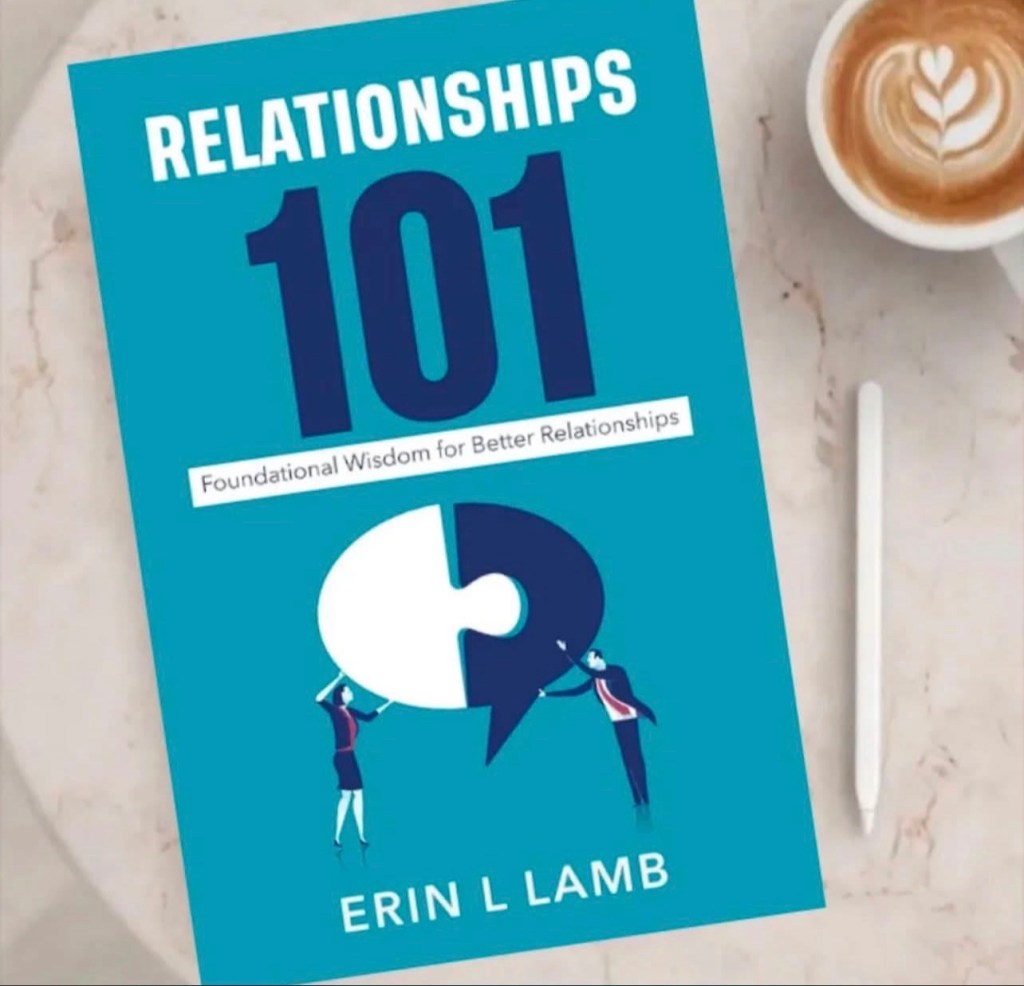
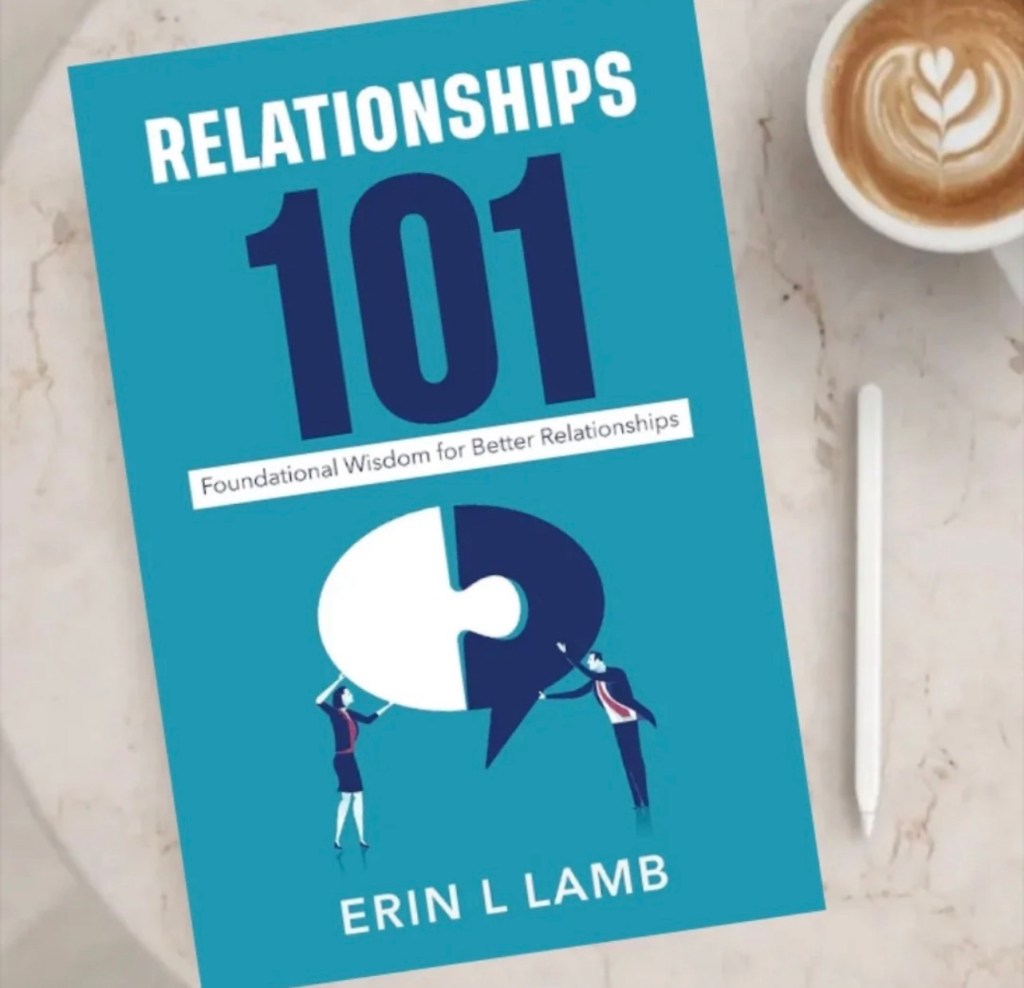
If you’d like to learn more about building healthy relationships, check out Relationships 101: Foundational Wisdom for Better Relationships.

Get your copy here

Erin Lamb

Strong Relationships. Clear Purpose. An Empowered Life.

What if living a more purposeful life begins with strengthening your relationships?

Many people seek greater fulfillment, direction, and meaning, yet overlook one of the most important foundations of personal growth: healthy relationships. Our relationships influence our confidence, emotional well-being, decisions, and ability to pursue the life we desire.

When relationships flourish, we are better equipped to grow, lead, and thrive.

That’s why I’m excited to share two powerful personal development resources that can help you strengthen your foundation and move forward with greater intention: Relationships 101: Foundational Wisdom for Better Relationships and The Purpose Workshop Video Training Package.

Build Stronger Relationships with Relationships 101

Every meaningful relationship is built on a foundation of understanding, trust, communication, and intentional effort.

Whether you’re seeking healthier family relationships, stronger friendships, improved workplace interactions, or greater self-awareness, learning relationship fundamentals can be life-changing.

Relationships 101: Foundational Wisdom for Better Relationships provides practical insights and foundational principles to help you:

  • Improve communication and understanding
  • Strengthen trust and connection
  • Navigate challenges more effectively
  • Develop healthier relationship habits
  • Create more meaningful interactions with others

Too often, we assume healthy relationships should happen naturally. The reality is that thriving relationships require intentional growth and practical tools.

This book was written to help you build those tools and create stronger connections in every area of your life.

Get Your Copy Today

📖 Available on Amazon:
Purchase Relationships 101: Foundational Wisdom for Better Relationships

Gain Clarity Through The Purpose Workshop

Once you’ve begun strengthening your relationships, the next step is gaining clarity about your purpose.

Purpose isn’t something that magically appears overnight. It is discovered through reflection, intentionality, and self-discovery.

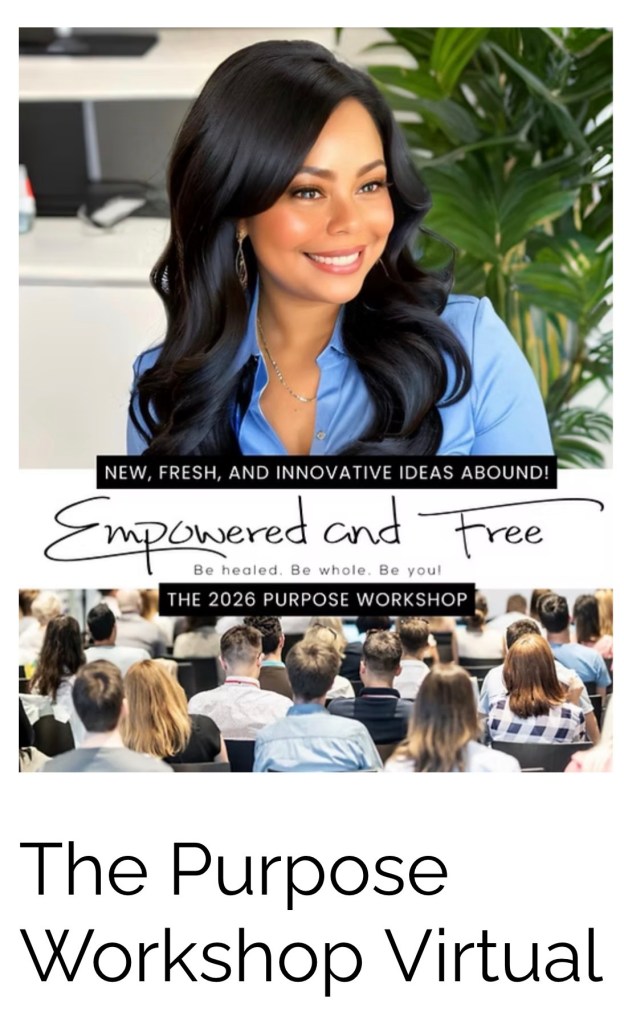
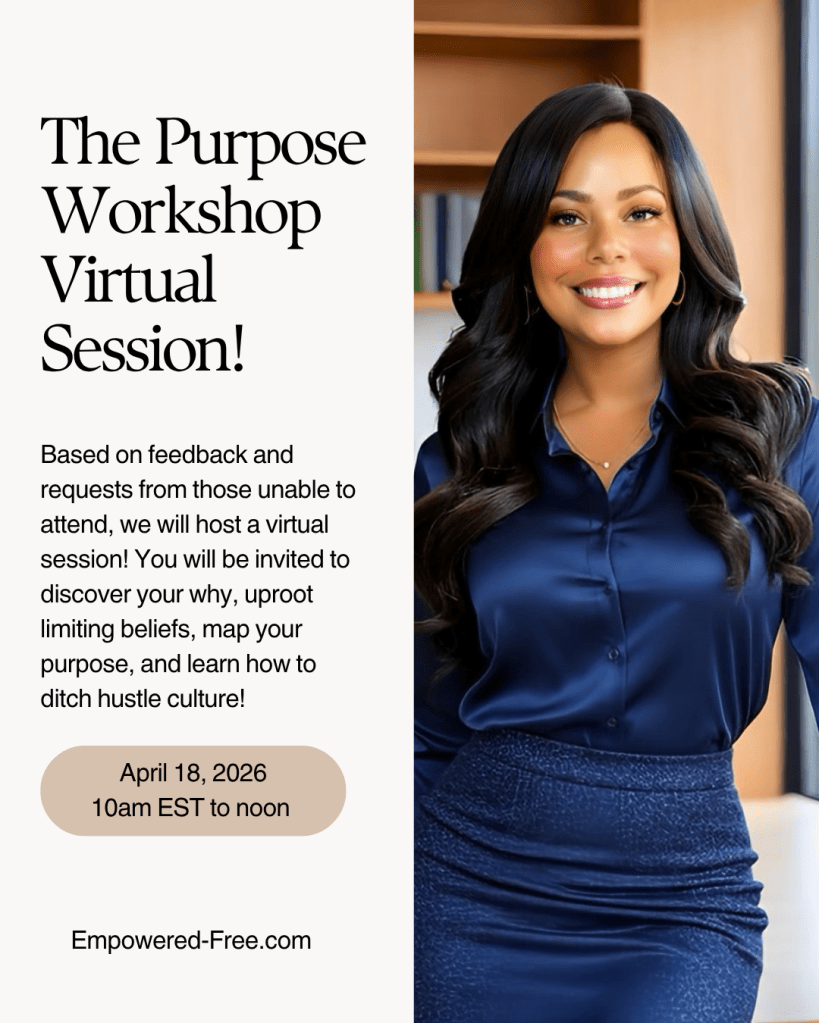
Although the live Purpose Workshop has concluded, you can still receive the complete workshop experience through the Purpose Workshop Video Training Package, which includes:

  • Full workshop video recording
  • Downloadable course materials
  • Guided exercises and reflection activities
  • Purpose discovery framework
  • Action-oriented tools to help you move forward

This self-paced resource allows you to work through the content at your own convenience while gaining the same transformational insights shared during the live workshop.

Through the workshop materials, you’ll learn how to:

  • Identify your strengths and gifts
  • Clarify your personal values
  • Recognize obstacles that may be hindering your growth
  • Discover what gives your life meaning
  • Create a roadmap for intentional living

Whether you’re navigating a career transition, seeking greater fulfillment, or simply wanting more direction, these resources can help you take meaningful next steps.

Access the Purpose Workshop Training

🎯 Get Instant Access:
Purchase The Purpose Workshop Video Training Package

You can have better!!

Xoxo,

Erin Lamb

Founder & CEO

Leading Through Fear & Uncertainty

From our mission work in Asia

Leading Through Fear and Uncertainty

There are moments in leadership when the path ahead is anything but clear.

The plans we carefully crafted change. The outcomes we hoped for remain uncertain. The challenges in front of us seem larger than our resources, our experience, or even our courage.

In those moments, we have a choice.

We can resist, retreat, and cling to fear. Or we can move forward despite the uncertainty, trusting that purpose is greater than our anxiety and hope is stronger than our doubt.

I have faced this reality many times through our work serving people experiencing homelessness and survivors of human trafficking. Some situations carry significant risks because the goal is not simply to meet a temporary need. The objective is freedom. The objective is restoration. The objective is helping someone escape exploitation, poverty, or circumstances that have held them captive for far too long.

Whenever we step into difficult situations, there is always a question that emerges:

Is the risk worth the reward?

For me, the answer has always been yes.

Every life restored is worth it.

Every child given a second chance is worth it.

Every person who discovers freedom, hope, and dignity is worth it.

Over the years, I have found two forces that are more powerful than fear: love and purpose.

When we live with a clear sense of purpose and a genuine love for others, our “why” becomes louder than our fears. That does not mean fear disappears. In fact, there have been many moments when fear felt overwhelming.

Fear has a way of screaming.

Love often whispers.

Yet I’ve learned that courage is found in that whisper. It is found in the quiet reminder to remember why we started. It begins as a small seed, but when nurtured through faith, conviction, and action, it grows.

That seed of courage moves us from saying, “Someone should do something about this” to asking, “What can I do about this?”

It challenges us to ask deeper questions:

  • Why am I here at this point in history?
  • What unique gifts have I been given?
  • What role am I meant to play in this story?

The truth is that none of us can do everything.

We are not superheroes.

But we can all do something.

Perhaps your leadership journey does not involve life-threatening situations. Perhaps you are leading through organizational change, economic uncertainty, staff turnover, or personal challenges. Maybe you are carrying the weight of difficult decisions while wondering what the future holds.

If so, I understand.

And while every situation is different, I have found that the principles remain remarkably similar.

Remember Your Why

When uncertainty rises, reconnect with the reason you stepped into leadership in the first place.

Who are you serving?

Who benefits from your vision, wisdom, and perseverance?

Purpose has a way of steadying us when everything else feels unstable.

Use What Is Already in Your Hands

Many leaders spend so much time focusing on what they lack that they overlook what they already possess.

Experience.

Relationships.

Wisdom.

Skills.

Faith.

Resilience.

Take inventory. Often, the tools needed for the next season are already within reach.

Focus on What You Can Control

Fear tends to magnify everything beyond our control.

Great leadership focuses on what can be influenced today.

You can control your attitude.

You can control your words.

You can control your behaviors and responses.

You can choose to lead by example.

One step at a time. One decision at a time. One day at a time.

Let Feelings Inform You, Not Direct You

Fear is real.

Ignoring it is not leadership.

But allowing it to dominate every decision is not leadership either.

Feelings are indicators, not dictators.

They provide information, but they should not determine our destination.

Acknowledge the fear. Evaluate the situation. Then move forward with wisdom and purpose.

Love Still Wins

One of the greatest privileges of my life is hearing stories from individuals whose lives have been transformed. Every letter, every testimony, and every story of restoration reminds me why this work matters.

Love changes lives.

Love restores hope.

Love overcomes fear.

And every time I witness someone’s journey from despair to freedom, I am reminded that the reward far outweighs the risk.

For me, it is far better to step into the arena and serve than to sit on the sidelines wondering why no one intervened.

The world may never need us to do everything.

But it does need us to do something.

So whatever challenge lies before you today, remember your why. Lean into your purpose. Let love speak louder than fear.

You may discover that courage was there all along, waiting for you to take the next step.

—

About the Author

Through writing, speaking, and nonprofit leadership, I am passionate about helping individuals discover purpose, lead with courage, and create lasting impact in their communities.

To learn more about our work serving individuals experiencing homelessness and survivors of human trafficking, visit:

https://OperationGodisLove.org

Love,

Erin Lamb

The Power of Being Seen

Soul Sunday: The Power of Being Seen

Your investment doesn’t have to be millions of dollars to make a meaningful impact.

Several years ago, OGL, the nonprofit homeless outreach I founded, was invited to Indiana to help lead community outreaches. During one of those trips, we spent time listening to the stories of people experiencing homelessness.

One gentleman, whom I’ll call Jon, shared his journey of traveling from state to state in search of work.

As we talked, he shared a lesson I have never forgotten:

“People think it’s the big things that change lives, yet forget the seemingly small things do too.”

Curious, we asked him to explain.

He told us that during his travels, people would often hand him a bottle of water. It seemed simple, almost insignificant. But to him, it meant survival.

“I had hunger at times, but I didn’t go thirsty. I’m thankful for the people who simply handed me a bottle of water. They saved my life.”

His words challenged my perspective. What we view as small may be vital to someone else.

Since that day, I’ve made it a habit to keep bottled water in my vehicle. You never know when a simple act of generosity might meet a critical need.

Another encounter comes to mind.

Near a local university, I noticed a man sitting alone with his head down. He appeared discouraged and withdrawn. From a distance, I called out, “Hey buddy, are you hungry? We have food.”

He lifted his head and smiled—a wide grin that immediately changed the atmosphere.

We sat with him for a while, listening to his story. Before we left, he thanked us in a way that stayed with me long after the conversation ended.

“You don’t know how many people walk past me as though I do not exist. You saw me. Thank you.”

Those words were a powerful reminder that people are not only hungry for food. Many are hungry to be seen, heard, and valued.

A bottle of water. A shared meal. A smile. A conversation.

These actions may seem small, but their impact can be profound.

As we move through our days, may we remember that kindness does not require great wealth, influence, or resources. Often, it simply requires awareness and a willingness to care.

The smallest act of compassion may become one of the most meaningful moments in someone else’s story.

Love thy neighbor. ❤️

—

What is one small act of kindness someone showed you that made a lasting impact on your life?

Love,

Erin Lamb

Founder/CEO of Empowered & Free

Empowered-free.com

Three Struggles With How the Church Teaches Marriage

Three Struggles With How Churches Teach on Marriage

There are a few long-standing struggles I have with how many churches teach about marriage—particularly when it comes to male authority, headship, and the command for wives to submit. These teachings are often presented as biblical truth, yet the framework frequently misses the heart of Jesus and the way God defines leadership, power, and oneness.

Here are three of the biggest tensions I continue to wrestle with.

—

1. Leadership Is Rarely Defined the Way God Defines It

One of my greatest struggles with Christian teachings on male authority and headship is how little attention is given to how God defines leadership.

Biblically, leadership is not about control, dominance, or hierarchy. Godly leadership looks like this:

  • Laying one’s life down
  • Serving sacrificially and unselfishly
  • Walking in integrity
  • Using power to empower others

Godly leadership does not subjugate—it elevates.

Jesus modeled this perfectly. Those under Jesus’ authority became stronger, wiser, and more capable. They were sent out to do what they had seen modeled—not to fetch things or cower under commands. Leadership in the Kingdom produces growth, not fear.

This version of leadership sounds nothing like:

“I am your King. Submit, peasants.”

Yet too often, that is how authority is practically lived out in Christian marriages.

—

2. The Diminishing of Women’s Leadership, Wisdom, and Skill

Another deep struggle is how these teachings often diminish the leadership, knowledge, and competence of women.

A woman may have known Jesus her entire life. She may be wise in Scripture, finances, leadership, emotional intelligence, and managing a household. Meanwhile, the man she marries may know far less or possess fewer skills—yet she is told to submit to him simply because he is male.

This is not mutual yielding (the part of Ephesians many teachings skip over).

Instead, she is often asked to shrink.

Her voice is softened.
Her authority is surrendered.
Her discernment is overridden.

Over time, she becomes smaller, quieter, and less powerful—not because God designed it that way, but because theology demanded it.

—

3. A Lack of Accountability—and Protection—for Women

The final struggle is perhaps the most painful.

From my perspective, churches often fail to hold men fully accountable—especially within the home.

The pattern frequently looks like this:

  • “Just forgive him.”
  • He is removed from leadership at church for a season.
  • Meanwhile, at home, the damage continues.

A man may still be emotionally destructive. A wife’s confidence, sense of safety, or heart may already be shattered. Yet the message remains:

“God put him in charge.”

She is told to pray.
She is told to submit.
She is told God will help her endure.

Protection for women is minimal. If she leaves or divorces, she becomes the sinner—regardless of the harm endured.

This framework does not reflect the heart of Jesus.

—

Jesus Is the Filter—Always

Jesus is the model, not cultural interpretations of authority.

Even the apostle Paul made it clear: “Follow me as I follow Christ.” Every part of Scripture must be filtered through the life, teachings, and character of Jesus.

When theology produces fear, silence, powerlessness, or harm, something is off.

I know these words may not change the system—but perhaps they will cause someone to pause, question, and rethink how marriage is taught in the church.

💛

—

Words of Jesus on Leadership, Authority, and Oneness

“For this reason a man shall leave his father and mother and be joined to his wife, and the two shall become one flesh.”
—Matthew 19:5

“Whoever wants to be a leader among you must be your servant.”
—Matthew 20:26

“For even the Son of Man did not come to be served, but to serve.”
—Mark 10:45

“Listen carefully: I have given you authority… nothing will in any way harm you. Nevertheless do not rejoice at this, that the spirits are subject to you, but rejoice that your names are recorded in heaven.”
—Luke 10:19–20

Authority in the Kingdom was never meant to crush. It was meant to protect, serve, and bring life.

—

Want to Go Deeper?

If these reflections resonate, Relationships 101: Foundational Wisdom for Better Relationships explores these ideas more deeply—offering practical, Jesus-centered wisdom for healthier, stronger, and more equitable relationships.

⭐ 5-star rated
📘 Featured at the 2025 London Book Fair

👉 Get your copy here:
https://a.co/d/09MntLnu

Love,

Erin L Lamb

The Christian Experience

One of my ongoing challenges as a human is my desire for people to make sense. This likely stems from my personality and the way I process information. In my walk with Jesus, there have certainly been moments that did not make sense. What I’ve come to appreciate is that God has always been patient with my questions. And while God is all‑encompassing, I’ve often found people to be far more mysterious. I’d like to share a few reflections that may help explain my perspective.

Throughout the Bible, the importance of loving God and loving our neighbors is emphasized repeatedly. Christians are instructed to love their neighbors as they love themselves. When I strip this down to its simplest form, it resembles what many of us learned early on as “The Golden Rule.” I remember being taught in primary school to do unto others as I would want them to do unto me. That teaching resonated deeply with me. Kindness, love, and respect felt intuitive and life‑giving.

As I grew older, however, I began to notice a disconnect. I encountered people who quoted Scripture, attended church regularly, and openly professed their love for God—yet their behavior toward others felt harsh or dismissive. The kindness and compassion I associated with Jesus were often absent. These individuals could articulate doctrine well and debate theology fluently, yet interactions with them rarely left me feeling drawn toward God. More often, I found myself feeling guarded, unsure how to engage without being wounded.

This has long puzzled me. How do we reconcile the belief that God is love while treating other people in ways that feel anything but loving? I once asked Copilot for insight on this, and the response resonated: people tend to judge others by their actions, while judging themselves by their intentions rather than their impact. That distinction has stayed with me.

Recently, while sharing reflections about Christianity on a new social media platform, I’ve been struck by how often faith conversations can turn combative. Some who identify as Christians engage in ways that feel more like spiritual bullying than spiritual guidance. Scripture is sometimes wielded as a weapon rather than an invitation. I’ve been called names and told I am not a Christian—often for simply sharing the direct words and teachings of Jesus. These moments have invited me to pause and reflect rather than react.

Over the years, a few things have become clearer to me:

Knowing the Bible is not the same as knowing the One it points to.

Abiding in Jesus tends to produce good fruit. Yet I’ve observed that some people’s understanding of God and Jesus is shaped less by Scripture itself and more by culture, church environments, leaders, or family systems. Their version of faith reflects what they were taught rather than what they’ve personally encountered.

I’ve also noticed how easily the desire to be “right” can overshadow the call to love. Winning arguments can become more important than honoring people. Yet love, by its nature, cannot be forced, nor can genuine relationship.

People are at vastly different stages in their walk with God. Some have experienced decades of deep, relational communion with God; others are only beginning to explore who God might be. Each person’s view of God is shaped by their experiences and vantage point, and remembering this has helped me extend more grace.

Another realization has been this: we cannot give away a kind of love we have not yet received. For me to offer agape love to my neighbor, I must first believe and receive God’s love for myself. I’ve encountered many Christians who trust God enough for salvation but still relate to God as though God were harsh, punitive, or perpetually disappointed. When someone has not fully grasped the depth, breadth, and gentleness of God’s love for them, it becomes difficult to extend that love freely to others.

I’ve also struggled to understand why some Christians passionately defend politicians, celebrities, or even celebrity Christians solely because they claim to know God. Jesus spoke plainly when He said we would recognize a tree by its fruit and that His true disciples would be known by their agape—selfless, sacrificial—love. Scripture encourages discernment, urging believers to test and examine what they see. Yet in recent years, I’ve observed a tendency to overlook harmful behavior when the individual is influential or admired. From a faith perspective, influence does not exempt anyone from accountability.

What I’ve come to understand is that humans are not only created to worship; we are also created with a deep desire to belong. When a person or movement aligns with even some of our values, it can become tempting to excuse behaviors that contradict the teachings of Jesus. Idols—whether people, platforms, or ideologies—can quietly offer a false sense of identity, safety, and belonging.

I do not claim to understand everything. I don’t. What does make sense to me are the teachings of Jesus: love God; love your neighbor as yourself; love your enemies; seek to do good and avoid intentional harm; choose honor; let your light shine. Live in a way that invites others to want to know Jesus. Care for the poor. Welcome the stranger. Serve. Seek God in relationship. Be kind to others in the faith. Pray. Forgive. Act with mercy and pursue justice.

The way Jesus lived pointed beyond Himself—to something, or rather Someone, greater. In all my years of following Jesus, I can honestly say I’ve met only a handful of people—perhaps 10 or 12—whose way of living made me want to know Him more deeply. I’ve spent most of my life in church spaces, and over time my prayer has become simple: God, help me live in a way that draws people toward Jesus, not pushes them away. That remains my hope for every follower of Jesus, myself included.

Warmly,

Erin Lamb

When Being Low‑Maintenance Leads to Emotional Exhaustion and Invisible Relationships

When Being “Low‑Maintenance” Makes You Invisible

I was the low‑maintenance child.
The low‑maintenance friend.
The low‑maintenance employee.
The low‑maintenance girlfriend.

I functioned well on my own. Part of that is personality—but part of it was conditioning.

When you do what you’re told, don’t make messes, don’t ask for much, and stay compliant, it stops being appreciated and starts being expected. Over time, something subtle but painful happens: you become invisible.

From Reliable to Replaceable

You’re labeled the reliable one.
The strong one.
The one who doesn’t need much.

And instead of receiving care, protection, or emotional investment, you’re given more responsibility.

More weight.
More expectations.
More emotional labor.

Slowly, you stop being treated like a person and start being treated like a resource.

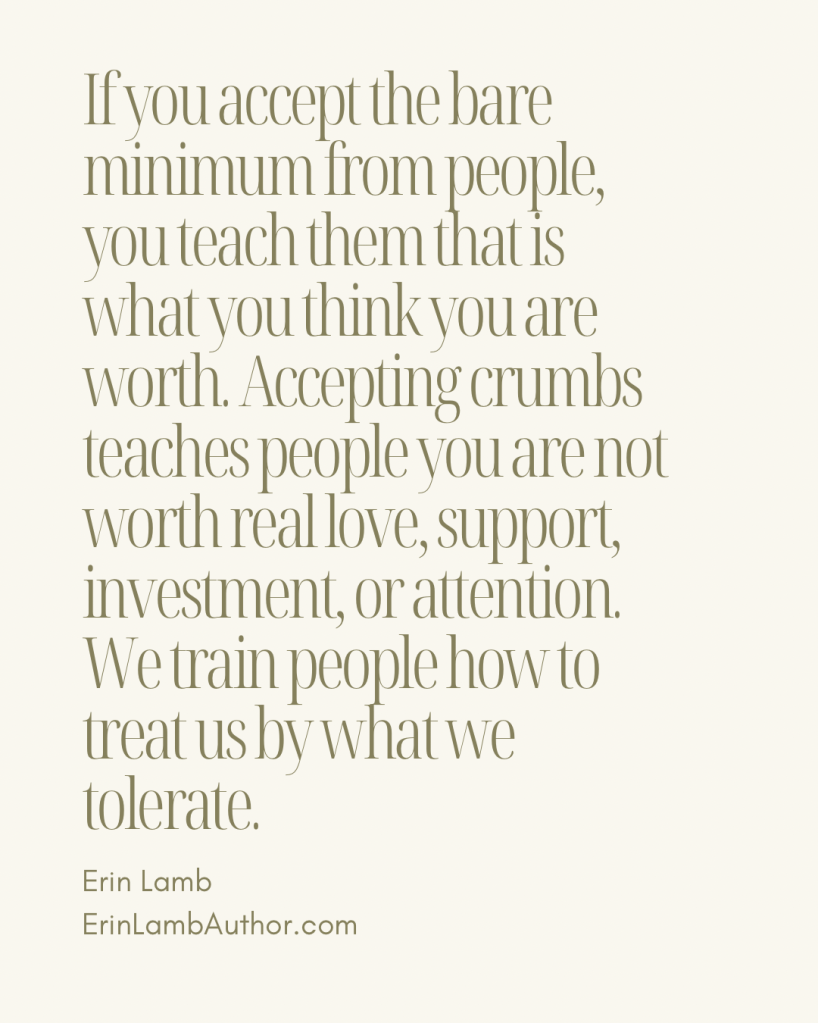
People lean on you. They bring their problems, their crises, their emotions—but they invest little or nothing in return. The relationship becomes one‑sided, and you’re expected to accept crumbs simply because you’ve survived on less.

What I Learned About Boundaries

Here’s what I learned—and it wasn’t easy:

I stopped being a resource for people.

If I can figure it out, they can too.
Just because I require less doesn’t mean I deserve less.

I stopped accepting crumbs.
I stopped entertaining people who only show up when they need something.
I stopped allowing emotional gaslighting.

“I Never See You Anymore”

“You’re never around.”
“I never hear from you.”

But let me ask this:

Did you call just to talk to me—not at me?
Did you put time on my calendar for genuine connection instead of emotional dumping?
Did you show up when I wasn’t in crisis?

No?

Then missing me is not my responsibility.

Choosing Health Over Access

These days, I lovingly redirect people to therapists, 24/7 prayer lines, or their pastors—because I am no longer the unpaid emotional support system for people unwilling to do their own work.

That doesn’t make me unkind.
It makes me honest.

Boundaries didn’t make me cold.
They made me whole.

Erin Lamb

Pick up the latest book Relationships 101: Foundational Wisdom for Better Relationships here: Relationships 101 Book

The Purpose Workshop (Virtual): Finding Your “Why” When Life Feels Unclear

Have you ever reached a point where you realized you were doing all the right things—yet something still felt off?

At I Thought I Knew What Love Was, we talk a lot about relationships, healing, and growth. But underneath all of that is a deeper question many of us wrestle with at different stages of life:

Why am I doing what I’m doing—and does it actually align with who I am now?

That question is the heart of the Purpose Workshop (Virtual).

—

Why Finding Your “Why” Matters

Purpose isn’t about having everything figured out or knowing your entire life plan. It’s about understanding what matters to you right now—so your choices, boundaries, relationships, and goals are rooted in clarity instead of confusion.

When you’re connected to your why:

  • Decisions feel less overwhelming
  • You stop repeating patterns that no longer serve you
  • You gain confidence in your next steps
  • Your relationships become more intentional and aligned

The Purpose Workshop is a space to slow down, reflect, and reconnect with yourself—without pressure, comparison, or judgment.

—

What the Purpose Workshop Is (and Isn’t)

This is a live virtual workshop designed to guide you through meaningful reflection and practical exercises that help you uncover clarity and direction.

It’s not a lecture.
It’s not about fixing yourself.
It is about creating space to listen to what you already know deep down.

When you register, you receive:

  • Access to the live virtual workshop
  • Downloadable course materials
  • The full workshop recording (even if you can’t attend live)

That means you can participate in real time—or watch later, pause, rewind, and reflect at your own pace.

—

Made for Real Life (and Real Schedules)

We know life is full—emotionally and practically. That’s why this workshop is flexible. If you can’t make the live session, you’ll still receive the complete experience, including the recording and materials.

Many participants actually prefer watching the replay so they can sit with the questions, journal, and move through the content slowly.

—

Join the Purpose Workshop

If you’re feeling stuck, disconnected, or simply ready to realign with yourself, this workshop is a powerful place to begin.

👉 Learn more and register here:
https://www.empowered-free.com/product-page/the-purpose-workshop-virtual

Clarity doesn’t come from rushing—it comes from understanding your why.

I hope to see you there!

You’re Designed for Freedom | Stop Settling for Less Than God’s Best

You’re Designed for Freedom

I once heard a pastor say that God will allow you to live at the level you settle for—and I agree. There is more. I sincerely believe we were created for more, yet many people settle for far less than what God desires to give them.

I lived in the land of settling.

I accepted situations, treatment, and relationships that were far below where I wanted to be. Why? I wanted to be thankful. I wanted to be someone who invested in others without placing demands on them. I accepted the bare minimum because Christianity taught me to put others first, forgive everything, and—somewhere along the way—I neglected the truth that God actually cares how I am treated.

There was far more emphasis on how I could love the church and others, and far less focus on how deeply God loved me.

When “Love” Looks Like Settling

I settled because I was told that’s what love does.
I settled because I believed I was demonstrating unselfish, sacrificial love.

What I failed to see—and what no one pointed out to me—was that I was failing to recognize my own value. I chose mediocre. God did not choose that for me.

I remember talking with a woman from church one day when she said,
“Erin, no matter how poorly I treat you, you’re always there for me. I just love you.”

That wasn’t a compliment. It was a slap in the face.

She knew the behavior was wrong. She continued because I tolerated it. I wasn’t a complete doormat—I simply chose to forgive her over and over again. I loved her despite her lack of love for me.

What I tolerated was a misalignment.

I was not living empowered or free. I was living a life of settling.

A Dangerous—but Life‑Changing—Prayer

This pattern continued for several more years with other long‑standing relationships, until I prayed a dangerous yet powerful prayer:

“God, anything that is not tied to my destiny or Your best for my life, I ask that You remove it.”

Within months, several long‑term friendships ended. Some people picked arguments over nothing. One person told me God said not to remain friends. During that same season, I was laid off from my job.

Everything shifted—radically.

Seven Years Later…

Fast forward seven years.

  • I have completed three books
  • I founded and launched Lamb Enterprises LLC (Empowered & Free)
  • I’ve appeared on TV and radio
  • Dozens of people have encountered freedom through soul healing
  • Nearly 50 people have been trained in soul healing
  • Relationships 101 was featured at the 2025 London Book Fair
  • I entered a new corporate role and have been promoted four times
  • I’ve traveled the world
  • I’ve gained healthy, supportive, invested friendships
  • I’ve recently been featured in news articles across the U.S. and overseas

I told God that I sincerely desired Ephesians 3:20 blessings—and that I did not want to spend my entire life suffering, merely overcoming, and living in heartbreak.

Rethinking Suffering and God’s Nature

I understand deeply that following Jesus can include persecution and suffering.
But I do not believe life was intended to be endless tears, disappointment, pain, heartache, or surviving on crumbs from someone else’s table.

I believe God desires more for His children than we would ever desire for our own.

Years ago, I had a vision. I was standing in a massive room with God. I couldn’t see God’s face, but I could hear His voice. As far as I could see—upward and outward—were gold boxes with names etched on them.

I asked what they were.

God replied,

“These are all the promises I have for My children that they never claim.”

The Lie of a “Cosmic Bully” God

I believe God is good.

Sadly, culture—and parts of religion—have portrayed God as a cosmic bully: demanding, cruel, and only interested in being worshiped. This false image shapes people’s expectations of God. They stop expecting much at all.

They stop believing for the exceedingly, abundantly, above all they could ask or imagine.

They settle and call it holiness.
They settle and say, “It’s God’s will.”
They remain stuck, assuming God is only trying to teach them a lesson.

God is absolutely able to turn ashes into beauty. But that does not mean God needs to burn everything to the ground to create something beautiful.

The message that God turns messes into messages should never encourage people to create messes just to see what God will do.

I don’t need to cut myself to prove that a doctor knows how to stitch wounds.

An Invitation to Freedom

My encouragement to you is this:

Ask God where you may be settling for less than what He wants to give you.

Ask God where your heart or mind may be bound.
Ask for freedom.
Ask for fresh eyes to see yourself—and your destiny—through God’s eyes.
Ask God to heal any wounds caused by religious teaching that painted Him as a cosmic bully.

There is more for you.
More for you in God and with God.

You were never designed to live bound, overlooked, or surviving on crumbs. Ask God where you may be settling—and be brave enough to receive what He’s always wanted to give you.

Bonus link to the UAE Times Article: Empowered & Free in UAE Times Article

Love,

Erin Lamb

God Highly Values You!

A lesson from my jeweler: what’s valued is not easily accessible.

My jeweler knows me; when I see her, she’s comfortable pulling diamonds and gems out of the case and handing them over to me. She knows who I am; she’s vetted me and sold me several pieces. You’ll note that everything that is real and costly is locked up – you cannot grab what you want. You’ll notice they do not offer diamonds at the price or availability of costume jewelry.

In human relationships, I’ve witnessed people offer themselves over to people who treat them horribly. Their open access, refusal to vet people, and lack of any boundaries lead to being used, abused, and mistreated.

Cheap and easy works well for fast food; it’s a recipe for disaster in matters of the heart.

I am not stating that materialism is the key to a good relationship, nor playing hard to get. I am stating that things shift when you start viewing access to you as something that requires vetting people. It is wise to see your value and worth and cease placing diamonds (your heart, body, time) in the hands of those who are not trustworthy. It means you allow people to see who you are, yet access to your inner world is reserved for those deemed trustworthy.

Early in my life I desired to love everyone and be an asset to everyone. What I learned were hard lessons. One lesson was love and access are not the same. You can love people and set boundaries with their access to you.

I talk about this in Relationships 101: Foundational Wisdom for Better Relationships. We choose the level of access people have to us.

I love traveling and I am planning to return to Asia soon. When I purchase tickets, they provide access to seats based on what we paid for in the ticket price. First Class seats are reserved for people who paid that price. Economy guests are not provided First Class privileges.

I was guilty of providing VIP treatment to economy people. I provided best friendship to lukewarm friends. I over invested in consumers. It was unwise and unhealthy.

When we know how valuable we are, we are highly selective of who has the closest access to us. We can love everyone. Trust is earned. Access is contingent on trust.

God placed such a high value on you that He paid the highest price to secure a relationship with you. You are not considered low value to God. It does not matter how others have interacted with you or treated you! What matters is the Creator of the Universe thinks the world of you! You were created on purpose. You are a handcrafted, original gem from the imagination of God.

Live loved.

Live on purpose.

Love,

Erin L Lamb