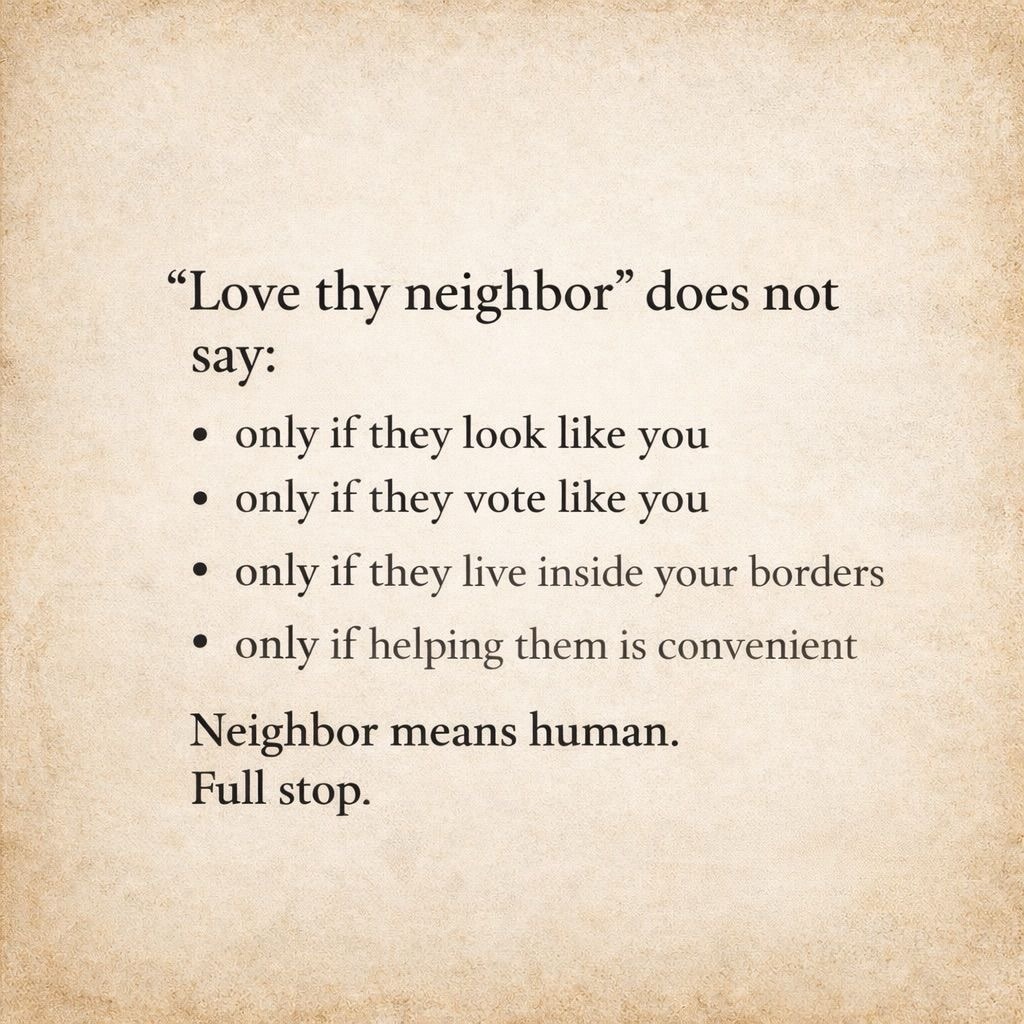
It’s easy to love people who look like us, think like us, vote like us, worship like us, and agree with us.
There is nothing remarkable about that.
The real test of Christlike love is how we treat the people we don’t understand, don’t agree with, or might even be tempted to avoid.
A racist neighbor taught me that.
So did a Muslim one.
When I moved into my neighborhood after graduation, I found myself living next to two men that society would have quickly placed into very different categories.
One was an American man with a reputation for being racist. He was known for calling the police on people for no apparent reason. He was unfriendly, avoided conversations, and generally wouldn’t speak to anyone who didn’t look like him.
My other neighbor was a Muslim man from the Middle East.
I made a decision early on that I would treat both of them the same way.
Every morning, I smiled. I said hello. I asked how they were doing. I treated them with kindness and respect, regardless of their backgrounds, beliefs, or attitudes toward me.
For more than a year, my racist neighbor ignored me. He wouldn’t return a greeting or engage in conversation.
Then one day, I saw him limping.
“Are you okay?” I asked.
For the first time, he stopped and answered me.
Not long after, he became seriously ill. To my surprise, I was one of the only neighbors willing to help him. I checked on him, helped him get to the pharmacy, and made sure he had what he needed.
Over time, his attitude changed.
The man who once refused to acknowledge my existence became friendly. We would chat when we saw each other. Eventually, he even started bringing me flowers.
My Muslim neighbor was different from the beginning. He was kind, respectful, educated, and considerate. He worked as a professor and was an excellent neighbor.
One day, I invited him for coffee.
During our conversation, he shared something that has stayed with me ever since.
He told me I was the first Christian he had ever met who was genuinely kind to him without immediately trying to convert him.
That statement broke my heart.
Not because Christians shouldn’t share their faith, but because kindness should never be conditional upon whether someone accepts our beliefs. Jesus loved people before they believed. He served people before they followed Him. He treated people with dignity because they bore the image of God.
My neighbor and I became friends.
Even after he moved away, we have stayed in touch. Every now and then, we run into each other, sit down, and catch up on life.
These two relationships taught me something important about the heart of Jesus.
Jesus never said to love only the people who look like you, vote like you, believe like you, worship like you, or agree with you. He said to love your neighbor as yourself.
Not selectively.
Not conditionally.
Not only when it’s easy.
Not only when it’s deserved.
Love does not require agreement.
Love does not require identical beliefs.
Love does not require someone to earn our kindness.
As Christians, we are called to demonstrate agape love: unselfish, sacrificial love that seeks the good of others. The world should recognize that we know Jesus not merely by what we say, but by how we love.
The world already has enough hatred, division, suspicion, and indifference.
What it needs is more kindness.
More compassion.
More people willing to see the humanity in one another.
So be kind.
Smile at the neighbor everyone else avoids.
Check on the person who has been difficult to love.
Listen to someone whose beliefs differ from your own.
Seek no intentional harm.
Choose love over judgment.
Because sometimes the most powerful testimony isn’t a sermon.
It’s simply loving your neighbor.
Live loved!
Erin Lamb

